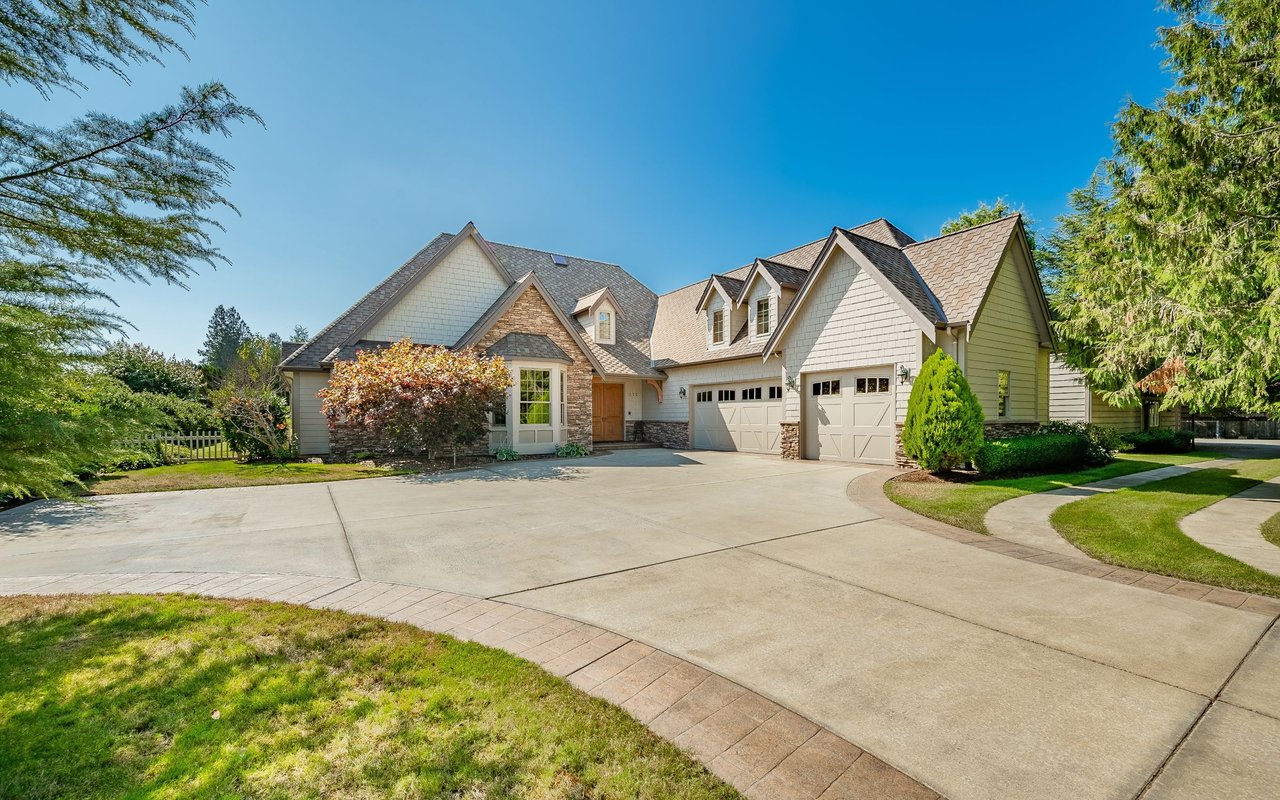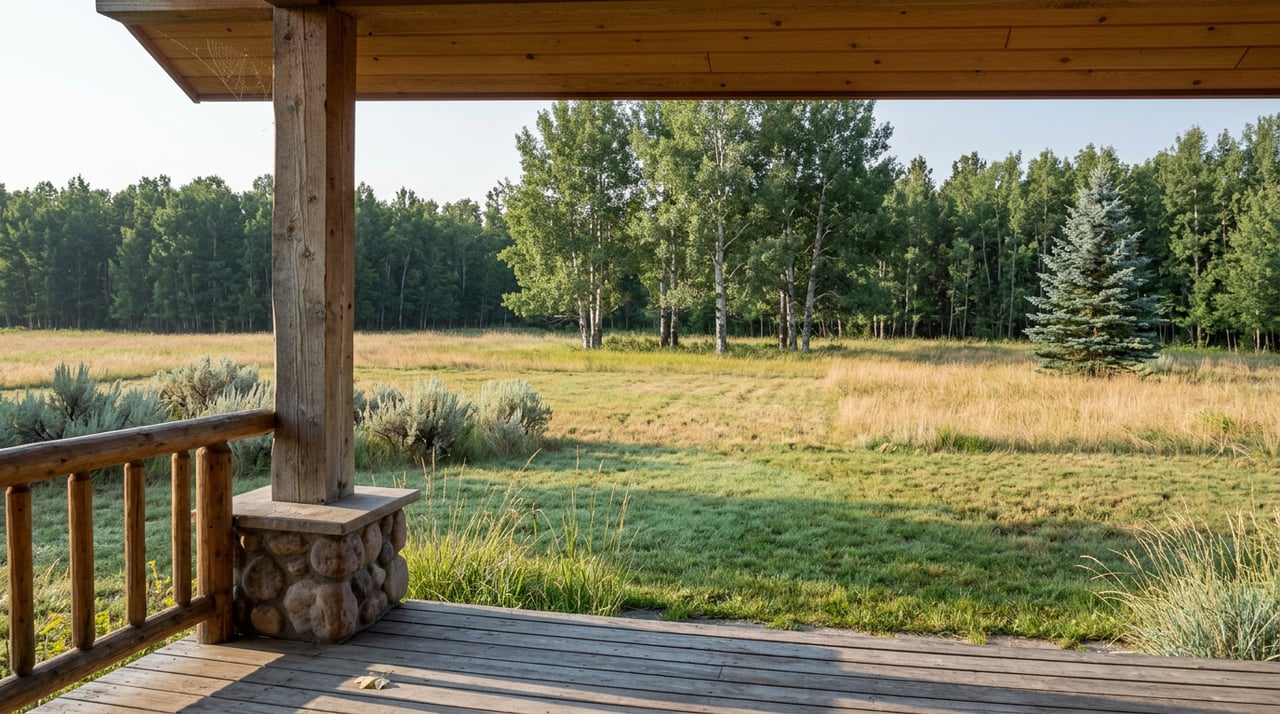
Two land listings near Collbran were on the market at the same time this year. One, a 40-acre parcel, listed for $150,000. Another, at 106 acres, listed for $1,065,000. Scale the smaller parcel up to 106 acres at the same per-acre rate and it would still land well under half the larger listing's price. Same small town. Same general high-desert terrain outside town limits. A price gap wide enough to make a buyer wonder what they're missing.
What they're missing is water.
Grand Mesa and Colbran get pitched to Grand Junction buyers as the cheap, wide-open alternative to the valley floor. More land, more privacy, more room to breathe, for less money than a comparable lot down in town. That story isn't wrong, exactly. But it skips the part that actually determines what a given parcel or home is worth up there, and it's the part that trips up buyers who assume acreage pricing works the way house pricing works everywhere else.
The house is smaller. That's the tell.
Start with the homes themselves. Listings tracked in Collbran this year put the average home there at 1,955 square feet, noticeably smaller than the Mesa County average of 2,332 square feet. Meanwhile Collbran's own median list price in May 2026 ran to $710,000, and average listing prices in the area have sat well above $580,000. Mesa County as a whole, by contrast, carried an average home value of $438,449 as of June 2026.
Put those two facts side by side and you get something that doesn't fit the "cheap alternative" story: smaller homes, similar or higher prices. If the premium isn't buying square footage, it's buying something else. On Grand Mesa, that something else is almost always land and the water rights attached to it, not the house sitting on top of them.
This matters for how you shop. A buyer comparing two homes of similar size and finish in Collbran and Grand Junction, using price per square foot as the yardstick, will misread the market every time. Up on the Mesa, the house is close to beside the point. The acreage and the water are the transaction.
Why water decides the price, not the house
The reason water carries so much weight here isn't abstract. It's infrastructure, and it's a specific piece of infrastructure with a name: the Bureau of Reclamation's Collbran Project. Built out in stages starting in the late 1950s, the project's centerpiece is Vega Dam and Reservoir, completed in 1962, which today holds roughly 900 surface acres of water behind it and anchors what's now Vega State Park. Since 1963, the Collbran Conservancy District has operated Vega Dam, the Leon-Park Feeder Canal, and the Southside Canal, moving that stored water down through Plateau Valley for irrigation.
That district, not the county assessor and not the listing agent, is the entity that determines whether a given parcel has irrigation rights, how many shares it holds, and whether those shares actually convey with a sale. Two neighboring properties can look identical on a plat map and carry entirely different water entitlements, because the rights were subdivided or sold off separately from the land decades ago. That's the mechanism behind listings like the 10.87-acre irrigated parcel outside Collbran that specifically advertises rolling pasture and mature cedar at 6,120 feet with a milder year-round climate than higher ground nearby, or the 70-acre parcel marketed with irrigation rights from Collbran Conservancy (Vega water) plus shares from Cottonwood Reservoir. The acreage number on its own tells you almost nothing. The water language in the listing tells you what you're actually paying for.
It also explains why a 40-acre dry parcel can list for a fraction of a 106-acre parcel with established water rights. Acreage scales roughly with price when the underlying water situation is comparable. It stops scaling the moment one parcel carries irrigation shares and the other doesn't.
What this means before you write an offer
If you're evaluating acreage or a home on land near Collbran, Mesa, or Molina, the house inspection is the easy part. The harder work is confirming, in writing, exactly what water rights are attached to the parcel and whether they transfer with the deed. That means asking the seller or their agent for the specific share count and source, whether Collbran Conservancy District water, Cottonwood Reservoir shares, or an independent well, and getting that confirmed against Mesa County records rather than taking the listing description at face value. It also means understanding that a parcel advertised as having "year-round access" is a separate claim from one advertised as "irrigated," and the two aren't interchangeable when you're pricing the land.
None of this is a reason to avoid the area. It's a reason to shop it differently than you'd shop a subdivision lot in town, where the house condition and the school zone do most of the pricing work.
The lifestyle case still holds, water aside
The reinvestment happening up there right now is real, and it matters even for buyers who aren't chasing irrigated pasture. Powderhorn Mountain Resort is replacing its West End double chairlift, a fixed-grip two-seater installed back in 1972, with a high-speed detachable quad. The new lift, refurbished by Grand Junction-based Leitner-Poma of America and named the Wild West Express, is timed to open ahead of Powderhorn's 60th anniversary season in 2026-27. That's the kind of capital commitment a small resort doesn't make unless it expects people to keep showing up.
The Plateau Valley School District tells a similar story on the community side. Students returned from winter break this past January to a new $66 million building that consolidated the district's pre-K through 12th grade programs into a single campus, replacing a structure built in the 1950s. It's the kind of investment that signals a community planning to stick around, not one hollowing out.
Neither of those facts changes what a parcel is worth per acre. But they're worth knowing if you're weighing a smaller house and a longer drive against everything else the area offers, because they answer the question buyers actually ask themselves after the paperwork: is this a place that's still building, or one that's just holding on.
A quick FAQ
Does every acreage listing near Collbran include water rights? No. Some parcels are sold dry, with no irrigation entitlement attached, while others carry documented shares from the Collbran Conservancy District or a specific reservoir like Cottonwood. The difference is almost never obvious from the road, which is why it needs to be confirmed in the listing paperwork or directly with the seller before you make an offer.
How do I confirm which water rights actually convey with a property? Ask for the specific share documentation tied to the parcel and cross-check it against Mesa County property records rather than relying on marketing language alone. If a listing mentions Collbran Conservancy District water or reservoir shares, get written confirmation of exactly what transfers at closing.
If you're weighing acreage on Grand Mesa against a home closer to town, the numbers alone won't settle it. Water rights, access, and what the land is actually built to support take a conversation, not a spreadsheet. Dee Dee Hansen Simpson has spent more than 30 years working transactions across the Grand Valley and the Western Slope, water rights included. Schedule a consultation before you write an offer on Mesa County acreage, not after.